History Notes
Between 1853 and 1867 Japan ended its long period of isolationism, referred to as the ‘Bakumatsu’. This happened after the Shogun (De Facto-Leader of Japan) was forced by American demands under threat of U.S Navy warships in Tokyo Bay to sign the treaty of Kanagawa. Caving into these demands caused a domino effect of Britain, France and Russia to hoist similar demands onto Japan.
Japanese goods at first would come in through china-specializing goods stores in France. By the late 1860s japan had left a strong enough impression on Europe and there was enough demand to sell Japanese goods as Japanese wares as opposed to chinaware. With traditional wooden paintings being especially sought after.
Jules Claretie coined this as “Japonisme” meaning ‘the cult of japan’.
By 1875, it was a full movement. With it later going from niche to mainstream in the 1880s, people would become obsessed with the aesthetics. Then it got labeled a fad by some artists in 1887, the popularity and public opinion started to decline. By about 1893 where the wooden prints became largely depreciated; the movement was over. With even original supporters of the movement rejecting the romanticized notions of Japan.
The Art style became used by political factions of the era, with the Franco-Prussian from 1870-1871. The analogy being that Japan much like France had suffered under the heel of European powers and that the art style was some form of voice for the vanquished. With both nations being embarrassed by Demoralizing treaties. The other political faction were the pro-aristocrats. Who saw the art as a symbol of a great aristocratic nation, something that France should aim to return to.
Worth noting that Vincent Van Gogh was a Japanist, who loved Japanese prints. He made Japan out to be something it wasn’t a land of socialist communal artists where time had stopped and people were in touch with nature. Things he deeply believed in. since he attempted to establish his own artists’ commune (unsuccessfully) which tells you that everybody could look at Japan and its mysteries and create their own fictitious utopia of hope for what they believed in. whether political or personal.
Between 1853 and 1867 Japan ended its long period of isolationism, referred to as the ‘Bakumatsu’. This happened after the Shogun (De Facto-Leader of Japan) was forced by American demands under threat of U.S Navy warships in Tokyo Bay to sign the treaty of Kanagawa. Caving into these demands caused a domino effect of Britain, France and Russia to hoist similar demands onto Japan.
Japanese goods at first would come in through china-specializing goods stores in France. By the late 1860s japan had left a strong enough impression on Europe and there was enough demand to sell Japanese goods as Japanese wares as opposed to chinaware. With traditional wooden paintings being especially sought after.
Jules Claretie coined this as “Japonisme” meaning ‘the cult of japan’.
By 1875, it was a full movement. With it later going from niche to mainstream in the 1880s, people would become obsessed with the aesthetics. Then it got labeled a fad by some artists in 1887, the popularity and public opinion started to decline. By about 1893 where the wooden prints became largely depreciated; the movement was over. With even original supporters of the movement rejecting the romanticized notions of Japan.
The Art style became used by political factions of the era, with the Franco-Prussian from 1870-1871. The analogy being that Japan much like France had suffered under the heel of European powers and that the art style was some form of voice for the vanquished. With both nations being embarrassed by Demoralizing treaties. The other political faction were the pro-aristocrats. Who saw the art as a symbol of a great aristocratic nation, something that France should aim to return to.
Worth noting that Vincent Van Gogh was a Japanist, who loved Japanese prints. He made Japan out to be something it wasn’t a land of socialist communal artists where time had stopped and people were in touch with nature. Things he deeply believed in. since he attempted to establish his own artists’ commune (unsuccessfully) which tells you that everybody could look at Japan and its mysteries and create their own fictitious utopia of hope for what they believed in. whether political or personal.
WOrk by Henry Riviere
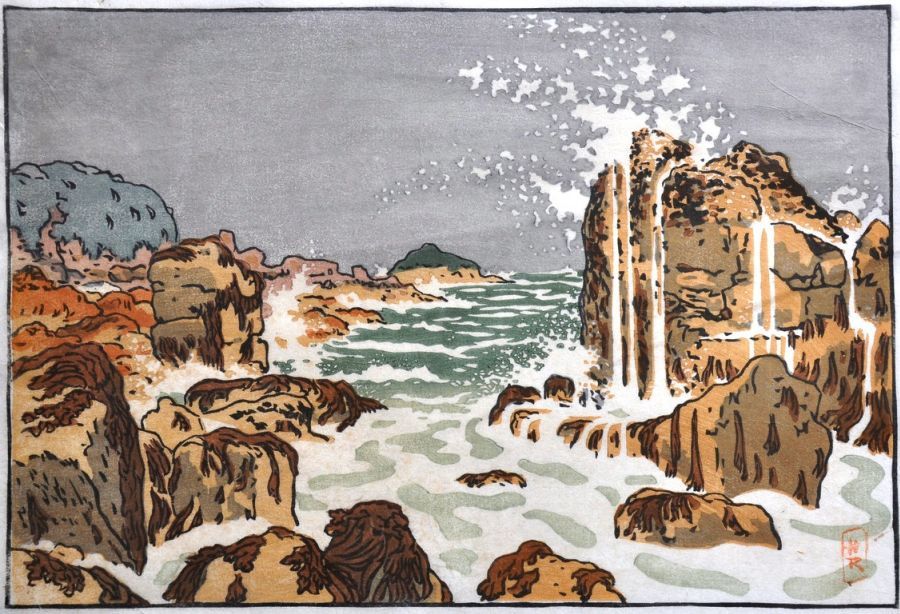
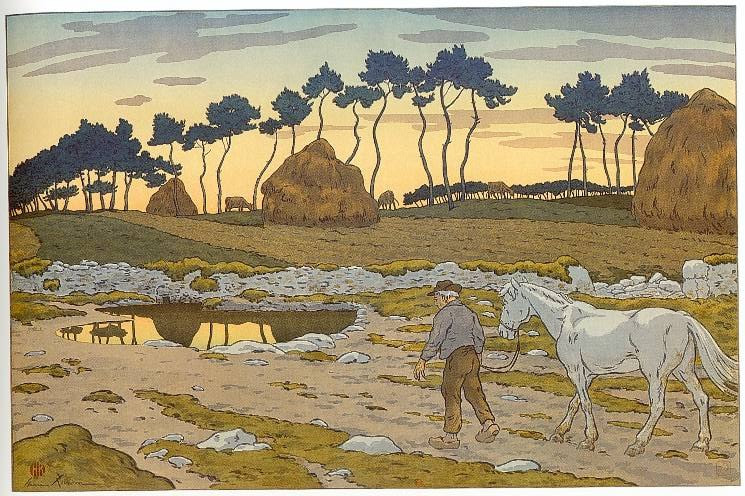

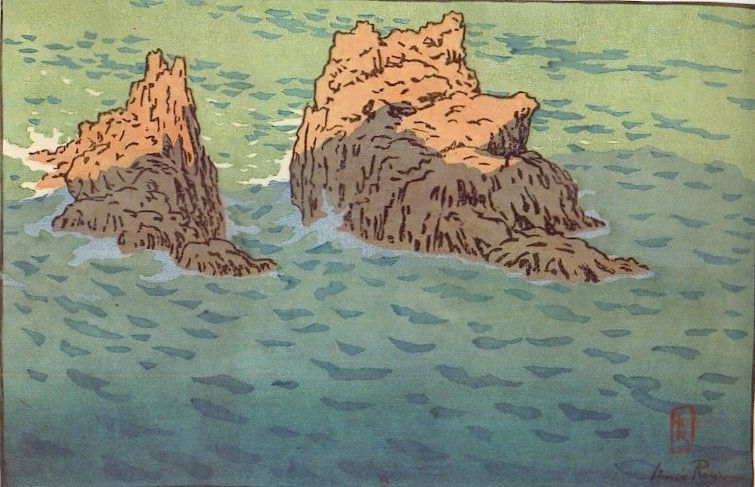
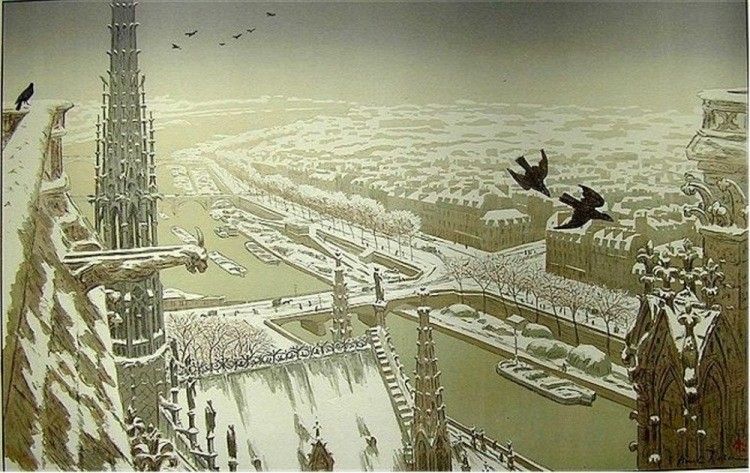
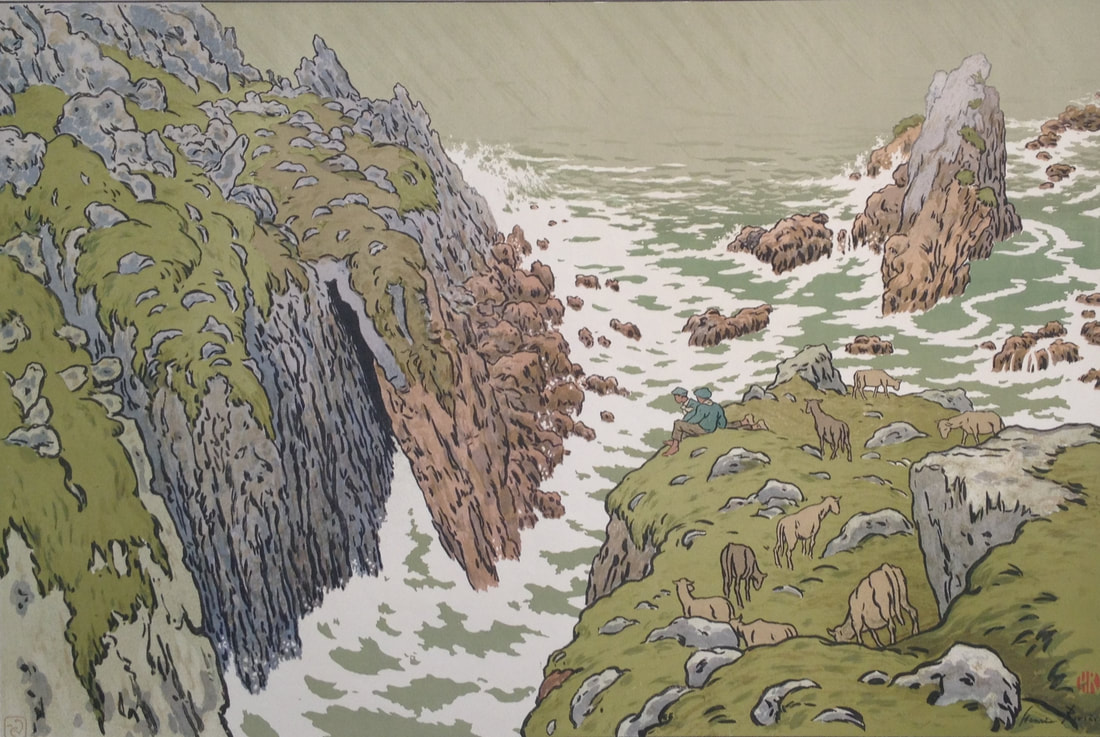
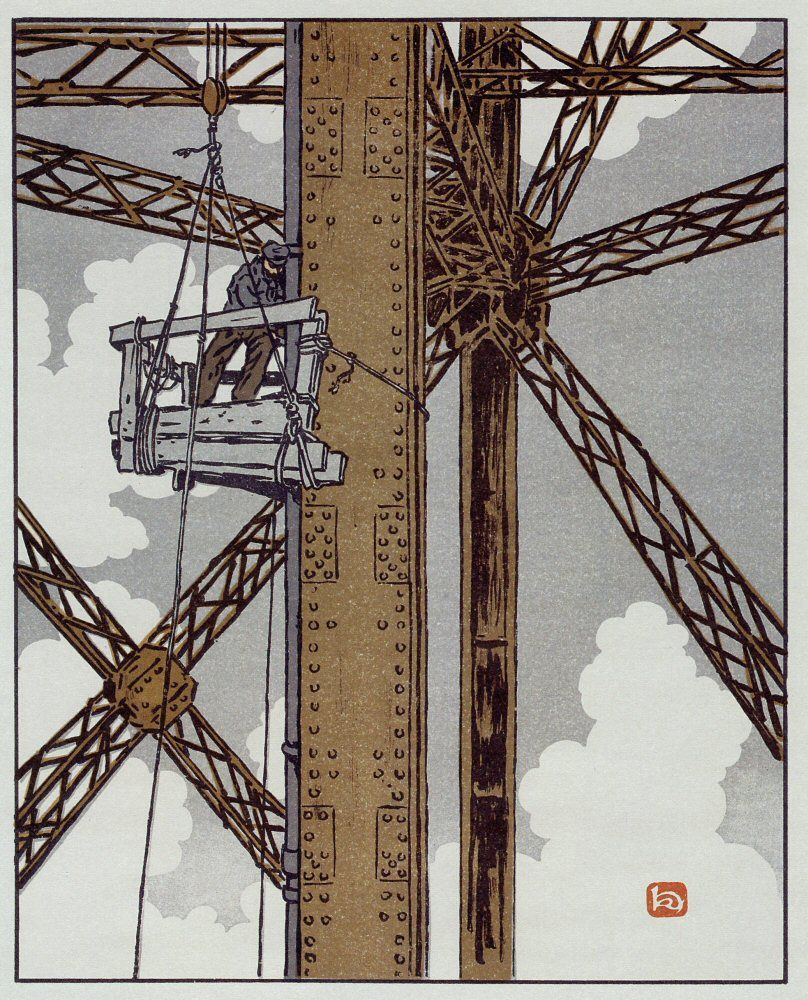
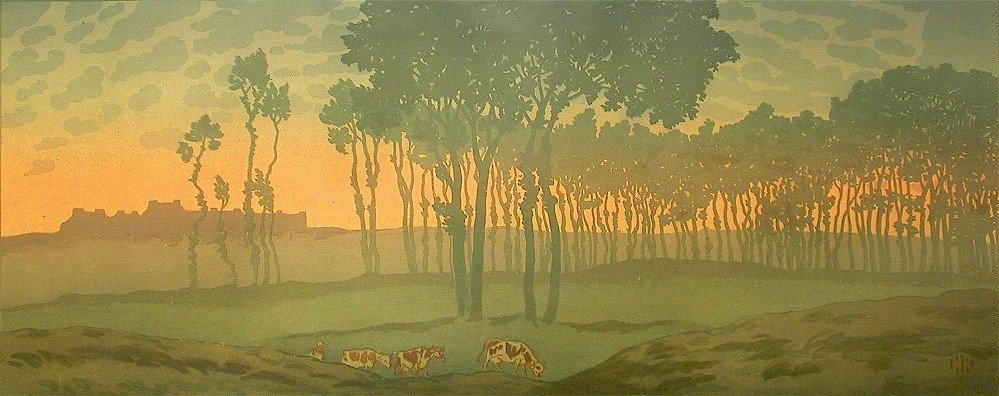
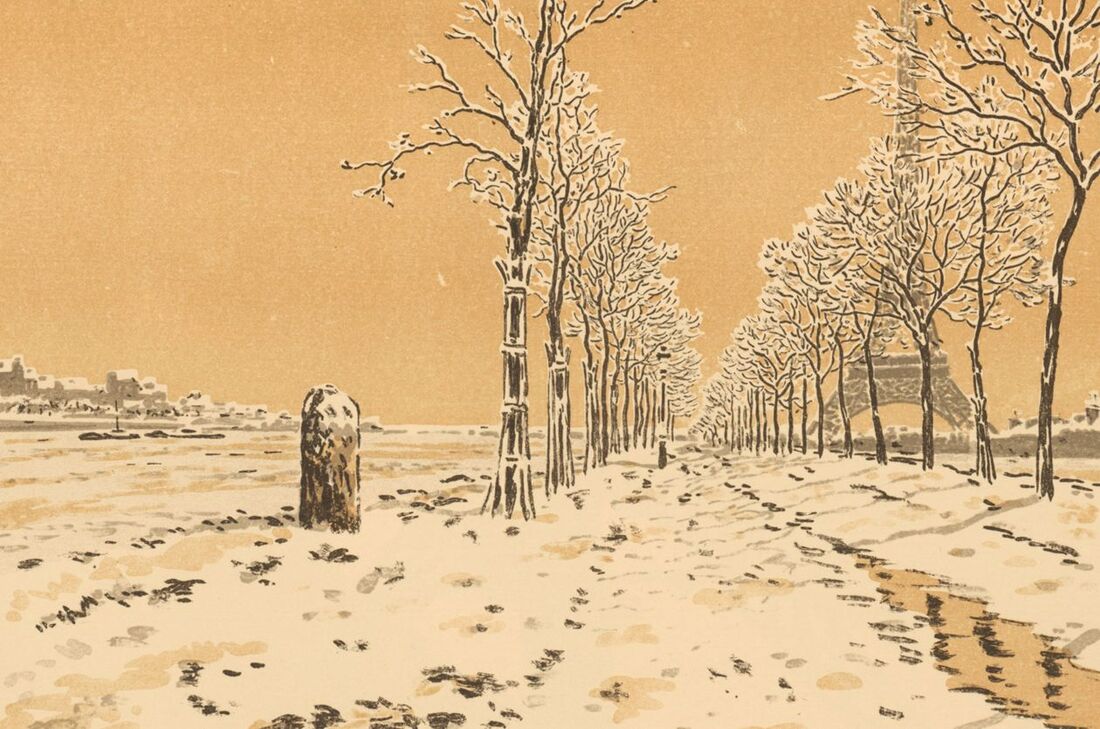
Henri Riviere grew up in the Pyrenees due to his family fleeing the Prussian army. He took an interest growing up in art, especially impressionism in the late 1870s. Then he became interested in Japan and Japanese art. He did shadow play shows at a café called Chat Noir and made a series of paintings called ‘36 views of the Eiffel Tower’ which were inspired by the Painting series ‘36 views of Mount Fuji’. Appearance wise his paintings are clearly borrowing from the style of the Japanese prints with their use of clear black lines and palettes which are lifted straight from other Japanese paintings, such as the greys, whites and black of paintings such as Evening Snow at Kambara by Utagawa Hiroshige. Tone wise it makes Paris seem like a mysterious and beautiful place. At the time Japan was a far away romanticized place that people would see some utopian values in. Turning this style onto Paris leads me to think that he was either trying to tell other people to calm down about Japan and that it was no more unique and beautiful as Europe, or that he instead was trying to specifically highlight the love he felt for Paris and the beauty of the city, and to try to extend that sense of love for Japan onto Paris. After all, this was a time after the Franco-Prussian war where many French people felt embarrassed and demoralized. So it may’ve been something to raise people’s spirits and something to bolster patriotism and national pride.
influential Japanese paintings from that era
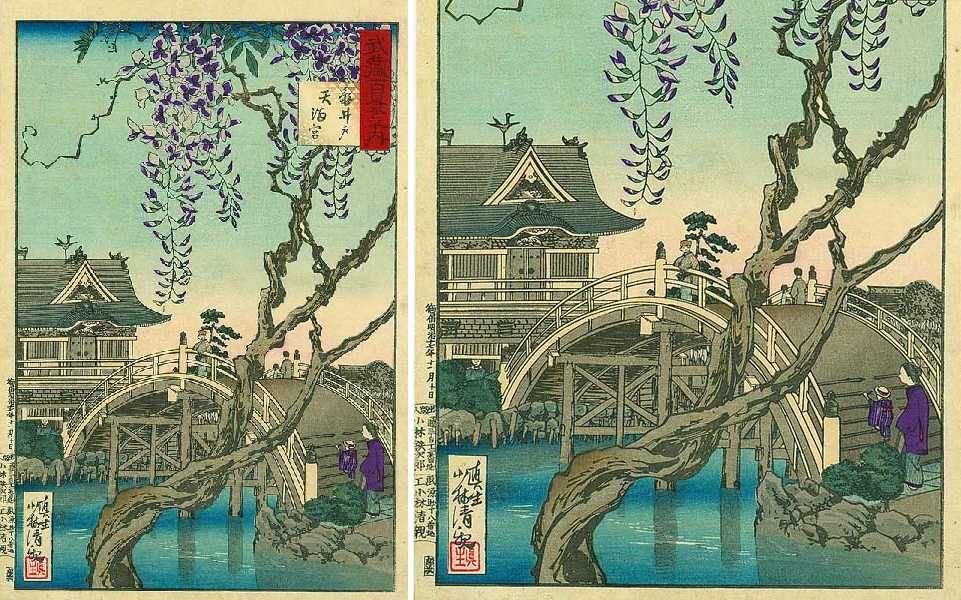
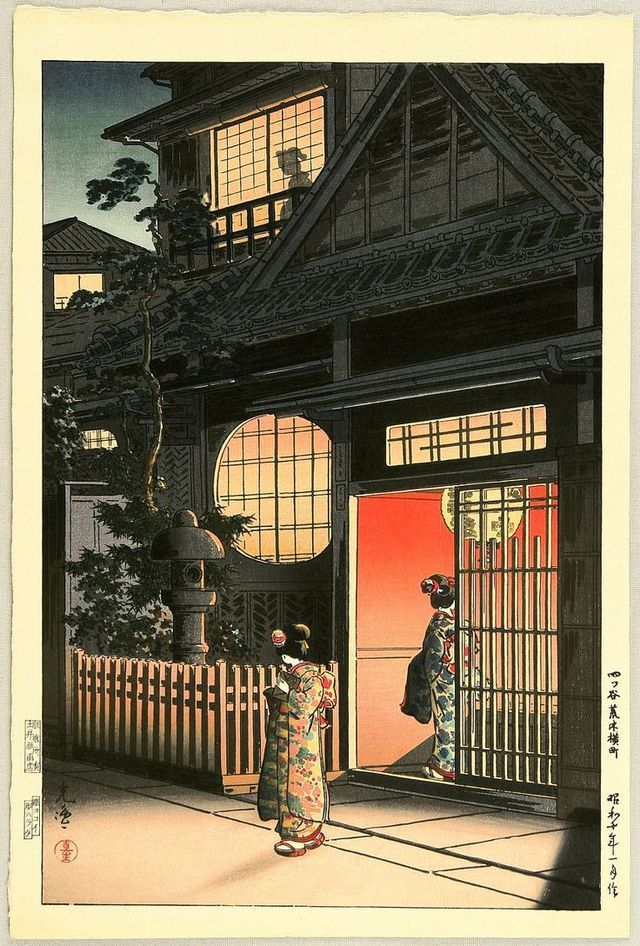
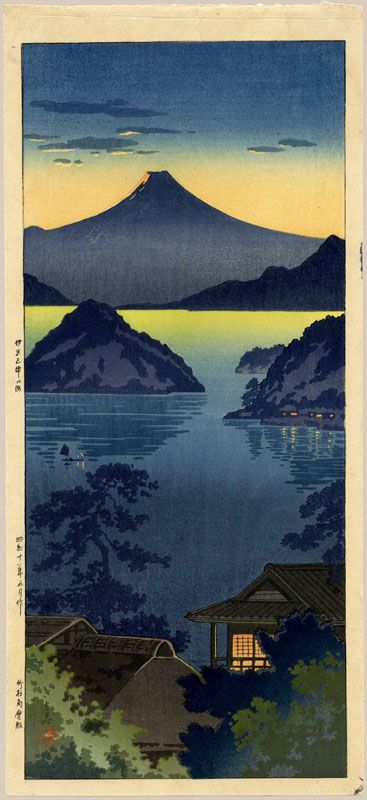
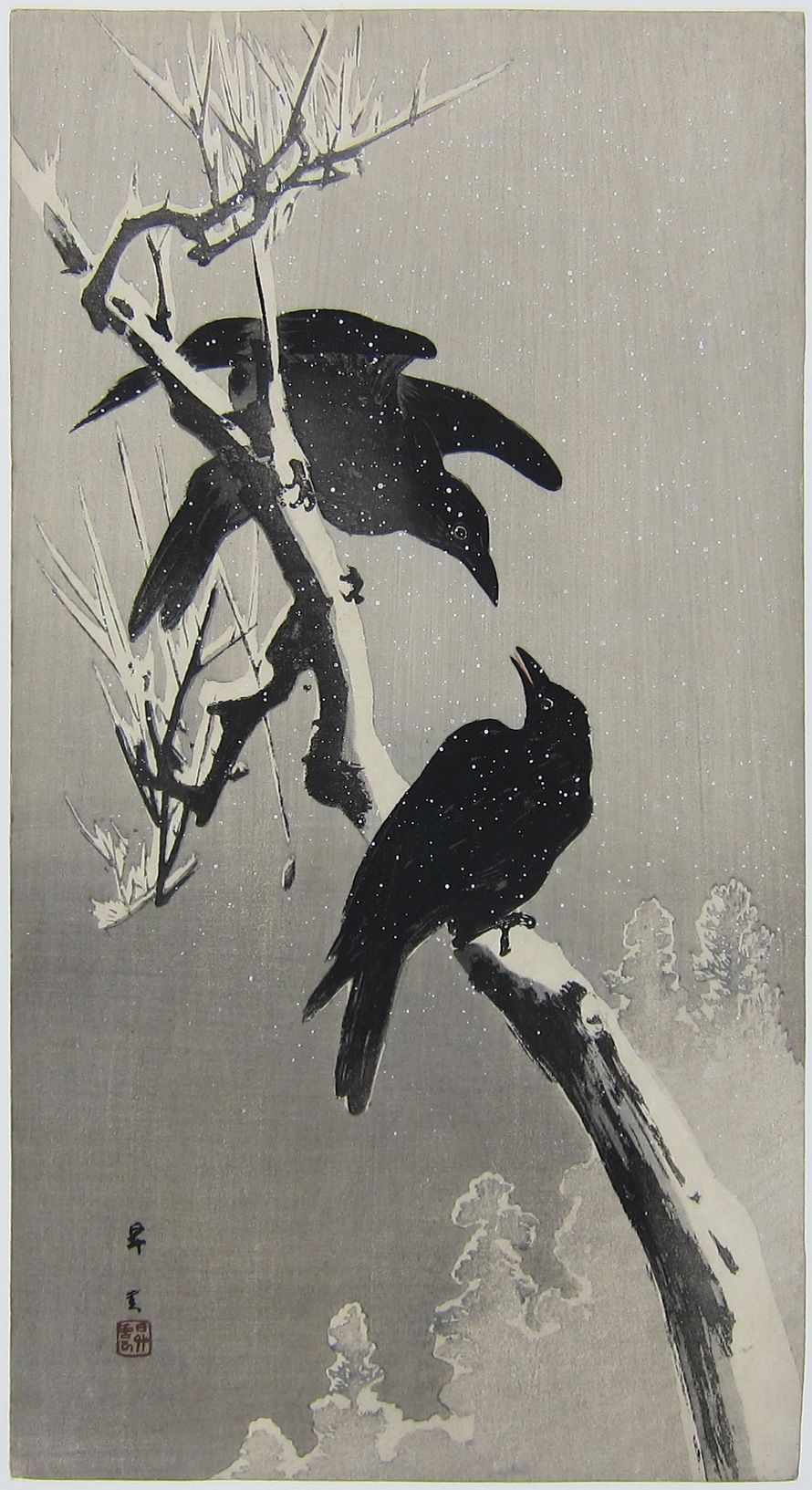
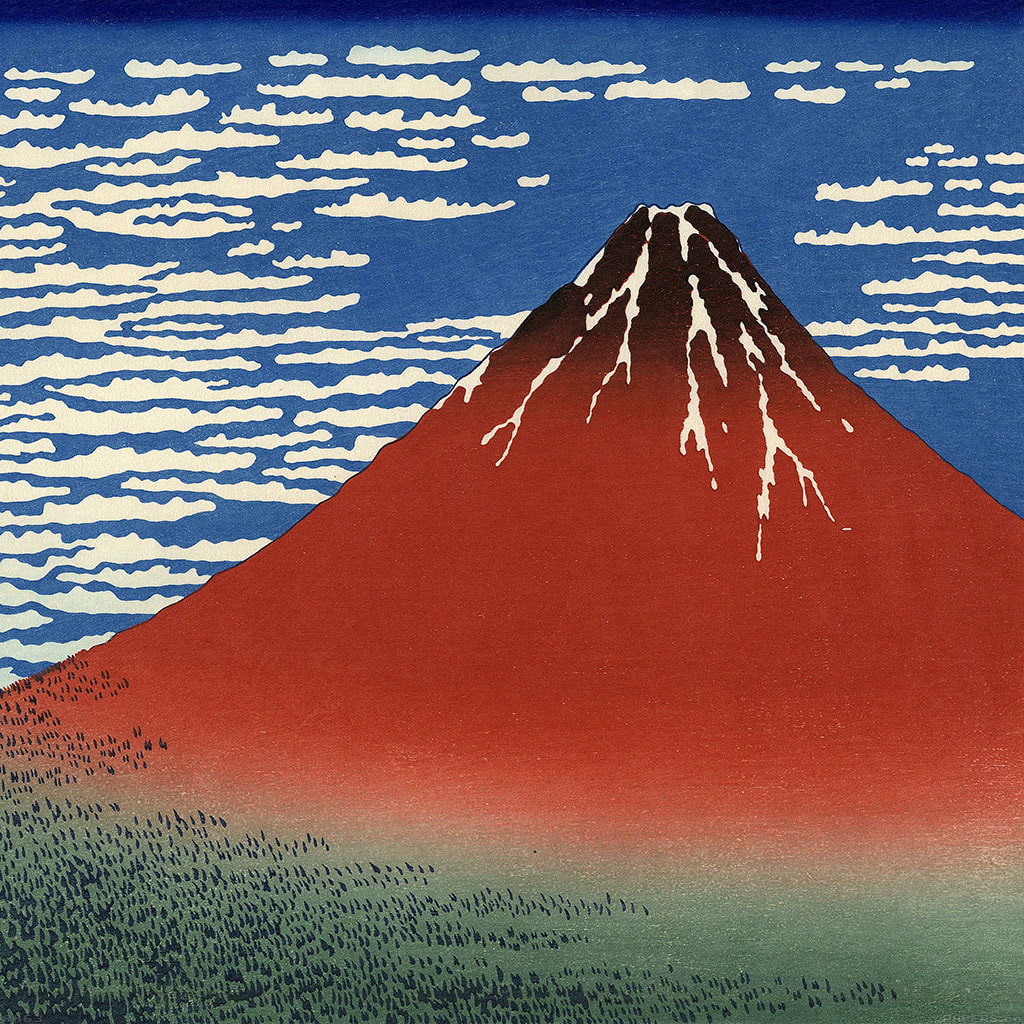
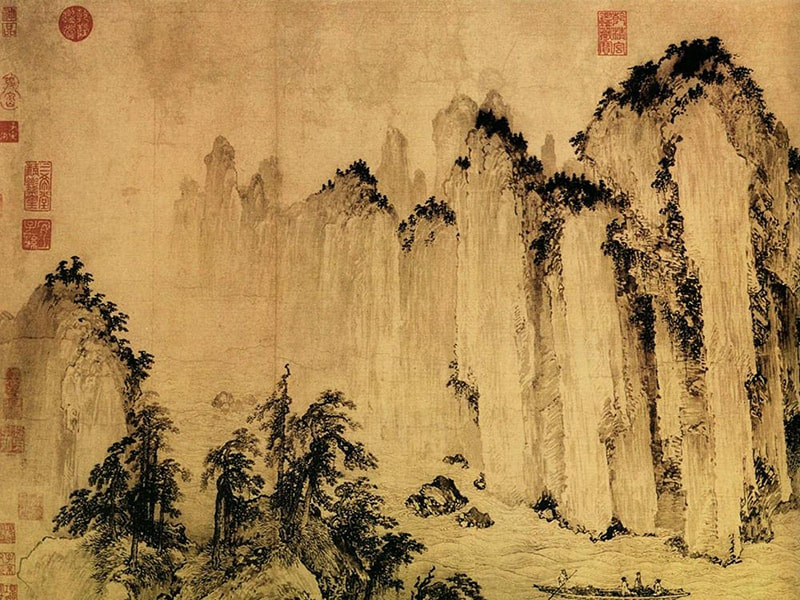
Jules Bastien-Lepage is an artist closely associated with the birth of naturalism. He lived in the 19th century and wasn’t influenced by Japanese art, he instead was focused on capturing elements of country life in rural France. Roger Fry: an influential art critic credits Jules as being the artist which convinced the masses to accept styles such as impressionism. His naturalist style is a compromise between conventional perception and impressionism. His teaching to the art world about breaking rules subtly for beauty which were accepted and praised were the link required to mainstream and popularize impressionism.
So what we have is subtle breaking of the rules to bring about more powerful messages while still keeping both feet quite firmly in reality, appeasing people’s sensibilities at the time. You see the more impressionist elements in the background.
So what we have is subtle breaking of the rules to bring about more powerful messages while still keeping both feet quite firmly in reality, appeasing people’s sensibilities at the time. You see the more impressionist elements in the background.
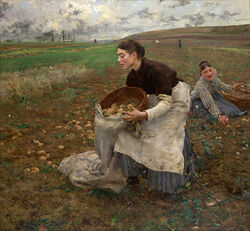
In this painting we can clearly see that the figures look photo realistic, and if you look at the trees in the background, they’re smudges. It’s dreamlike how much it pulls your focus to her face. The reflective shine across the edge of her face seems too beautiful and perfect to be natural or real, it just brings home this poetic feeling the artist is trying to convey about how beautiful she is. So I’d say he uses the style to romanticize the countryside. The style also puts people into focus and the world is this dream that people make their way through.
While the Japanese influenced art seems to romanticize locations and to make the locations a garden that the human subjects are merely passing through.
While the Japanese influenced art seems to romanticize locations and to make the locations a garden that the human subjects are merely passing through.